





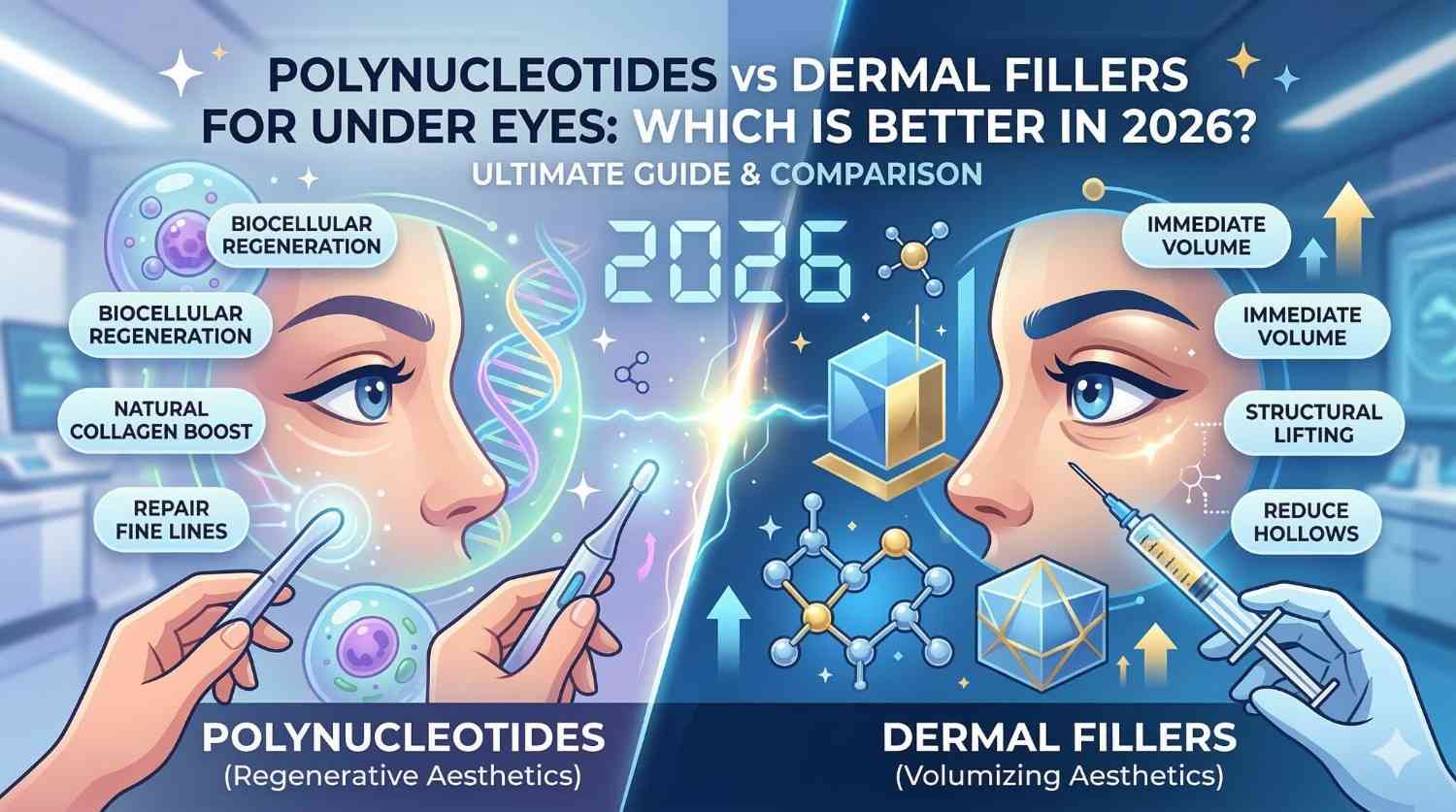
The under-eye area is one of the most talked-about concerns in UK aesthetics clinics right now. Whether it is dark circles, hollowing, fine lines, or that persistent tired look that no amount of sleep seems to fix, people across the UK are actively searching for solutions that actually work. Two treatments dominate the conversation in 2026: polynucleotides (PDRN/PN) and dermal fillers. Both are injectable. Both are non-surgical. But they work in completely different ways, and choosing the wrong one for your specific concern can leave you disappointed or, worse, with results that look unnatural.
This guide gives you a clear, research-backed comparison of polynucleotides vs dermal fillers for the under-eye area in the UK, covering how they work, what they cost, who they suit, and which treatment the evidence currently favours for different concerns in 2026.
What Are Polynucleotides and How Do They Work Under the Eyes?
Polynucleotides (also referred to as PDRN, short for polydeoxyribonucleotide) are purified DNA fragments derived from salmon or trout DNA. They are highly biocompatible with human tissue, which means the body accepts them readily without significant immune reaction. You may also see them marketed under brand names such as Plinest, Nucleofill, PhilArt, Ameela, or Rejuran in UK clinics.
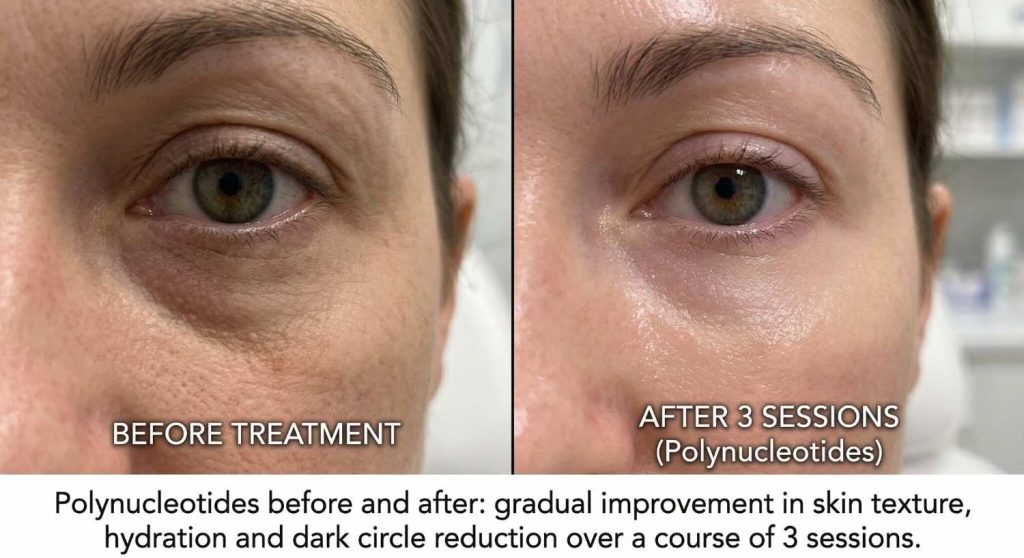
When injected into the delicate skin beneath the eyes, polynucleotides do not add volume. Instead, they act as biostimulators, triggering your skin’s own fibroblast cells to produce more collagen and elastin. They also enhance microcirculation and deep hydration from within. Think of them as a repair signal sent directly to the tissue rather than a filler that plugs a gap.
A typical polynucleotides under-eyes treatment plan in the UK involves two to three sessions spaced two to four weeks apart, with maintenance treatments recommended every six to twelve months thereafter.
What Are Dermal Fillers for Under Eyes (Tear Trough Fillers)?
Tear trough fillers are injectable gels made from hyaluronic acid (HA), a sugar molecule that naturally occurs in the body and binds water to keep skin plump. When carefully placed beneath the eyes by a skilled practitioner, HA filler physically fills the hollow gap between the lower eyelid and the cheek, instantly reducing shadows and the sunken look associated with volume loss.
Popular brands used for tear trough filler in the UK include Teoxane Redensity 2, Juvederm Volbella, and Restylane. These are lighter, thinner formulations specifically designed for the fragile tear trough area to minimise the risk of puffiness or an unnatural appearance. One of the key advantages of HA filler is that it can be dissolved with an enzyme called hyaluronidase if results are unsatisfactory or complications arise.
Want to understand the full landscape of non-surgical face treatments available in the UK today? Read our guide on the best non-surgical treatments for facial rejuvenation for a broader overview.
Polynucleotides vs Dermal Fillers Under Eyes: Side-by-Side Comparison
Here is a straightforward comparison of the two treatments across the factors that matter most to people searching for under-eye solutions in the UK:
| Factor | Polynucleotides (PDRN/PN) | Dermal Fillers (HA) |
| How It Works | Biostimulates collagen & elastin | Physically fills hollows with gel |
| Results Timeline | Gradual, 4-8 weeks | Immediate |
| Longevity | 6-12 months | 6-12 months |
| Sessions Needed | 2-3 sessions (course) | Usually 1 session |
| UK Cost Per Session | £150-£400 (London up to £500+) | £300-£600 |
| Reversible? | No – no reversal agent | Yes – dissolved with hyaluronidase |
| Best For | Fine lines, dark circles, crepey skin | Deep hollows, volume loss |
| Risk of Puffiness | Very low | Moderate (HA attracts water) |
Who Should Choose Polynucleotides for Under Eyes in the UK?
Polynucleotide treatment under the eyes is the better option when the primary concern is skin quality rather than volume. Specifically, this treatment tends to produce the most impressive results for people experiencing:
- Fine lines and crepey, papery skin beneath the eyes
- Mild to moderate dark circles caused by skin thinning and reduced circulation
- Pigmentation issues under the eyes that make the area appear darker
- General skin fatigue, dullness, and dehydration in the periorbital area
- Those who have previously experienced puffiness or migration from tear trough filler
- Individuals who are not suitable candidates for hyaluronic acid filler due to anatomy or a tendency toward fluid retention or eye bags
Polynucleotides are also increasingly popular among people who want improvement without the risk of looking overdone. Because the results build gradually over several weeks as the skin repairs itself, you get a rested, refreshed appearance rather than an obviously altered one. Clinicians at aesthetics clinics across the UK frequently describe the result as looking like you have had a full week’s sleep.
Who Should Choose Dermal Filler for Tear Troughs?
Tear trough filler remains the most effective treatment for one specific concern: true hollowing under the eyes. If you have a clearly visible sunken groove beneath the lower lid, which creates a deep shadow regardless of how well you have slept or how hydrated you are, filler is often the most impactful and immediate option.
Dermal filler also works well for people who:
- Have maintained good skin elasticity and thickness
- Want an immediate result for a specific event or occasion
- Have significant volume loss in the mid-face area contributing to under-eye hollowing
- Have already used polynucleotides to improve skin quality but still have residual hollowing
It is worth noting that tear trough filler is considered a high-risk area in aesthetics medicine. The tissue beneath the eyes is exceptionally thin and vascular, which is why this treatment should only be performed by a medically trained and experienced practitioner. For more guidance on choosing the right aesthetic clinic in the UK, see our article on what to look for when booking aesthetic treatments.
Polynucleotides Before and After: What Results Can You Realistically Expect?
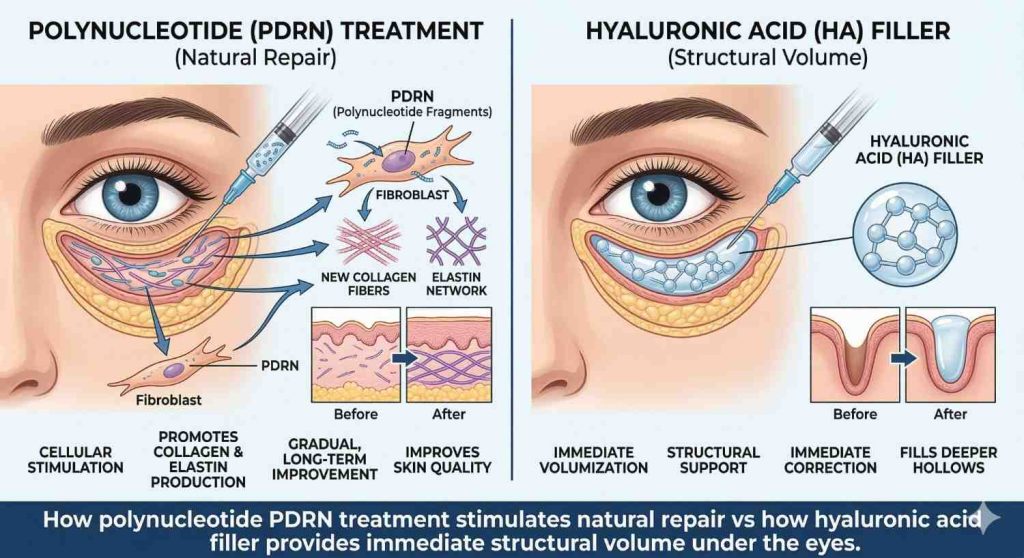
Managing expectations is essential with polynucleotide treatment. Results are not immediate. After the first session, many patients report that the skin feels softer and more hydrated within a week or two, but the visible improvements in texture, dark circles, and fine lines typically build progressively after each session and continue developing for up to two to three months after the final treatment in a course.
By the end of a three-session course, most patients see meaningful improvement in:
- Under-eye skin quality and hydration
- Reduction in the severity of dark circles
- Smoother, less crepe-like texture around the eyes
- Improved skin tone and a brighter appearance
- Softer appearance of mild hollowing
Tear trough filler results, by contrast, are visible within twenty-four to forty-eight hours. Swelling typically peaks within the first few days and then subsides to reveal the final result. When placed well, filler can dramatically reduce the hollow and shadow under the eyes in a single session. Results typically last six to twelve months before a top-up is needed.
For a closer look at how polynucleotides can also support broader anti-ageing goals, see our article on the best anti-ageing skin treatments available in the UK.
Polynucleotides Cost UK 2026: What Will You Pay?
Cost is one of the most-searched factors when people are researching these treatments. Here is an honest breakdown of what you can expect to pay at UK clinics in 2026, based on current pricing data:
| Location / Tier | Polynucleotides Per Session | Tear Trough Filler Per Session |
| London (Standard Clinic) | £200-£350 | £350-£500 |
| London (Harley St / Premium) | £400-£900 | £500-£900 |
| UK Regions (Avg.) | £150-£280 | £280-£450 |
| 3-Session Package (typical) | £350-£700 | N/A (usually single) |
Note: Prices listed are indicative ranges based on publicly available UK clinic data as of early 2026. Always confirm pricing directly with your chosen clinic, as costs vary based on practitioner experience, product brand, and the amount of product required.
When comparing costs, it is important to consider the full course rather than a single session. A three-session polynucleotide course in London typically costs between £350 and £700 when packages are available, making it comparable in total investment to a single high-quality tear trough filler appointment. Package deals are common at many UK clinics and reduce the per-session cost significantly.
The UK market for polynucleotide injectables is also growing rapidly. According to recent industry data, the UK PDRN/PN injectable market is projected to grow from USD 6.8 million in 2024 to USD 15.9 million by 2030 at a compound annual growth rate of 15%, reflecting the surge in demand for these treatments across the country.
Can Polynucleotides and Dermal Fillers Be Used Together?
Yes, and increasingly, this is exactly what experienced practitioners in the UK are recommending. The two treatments address different aspects of under-eye ageing and can complement each other effectively:
- Polynucleotides improve skin quality, thickness, and collagen density over time
- Dermal filler addresses structural hollowing and provides volume
- Together, they can produce results that are both structurally sound and naturally refreshed looking
A common approach at UK clinics is to begin with a course of polynucleotides to improve the health and resilience of the under-eye skin, and then assess whether a small amount of filler is still needed to address any remaining volume deficit. This staged approach also tends to reduce the amount of filler required, lowering the risk of over-volumisation or the Tyndall effect (a bluish discolouration that can occur when filler is placed too superficially in thin skin).
Safety, Side Effects, and What to Watch Out For
Polynucleotide Side Effects
Polynucleotide injections under the eyes are generally considered safe when performed by a qualified practitioner. Common, temporary side effects include mild redness, swelling, and small pea-sized bumps at injection sites that typically resolve within forty-eight to seventy-two hours. Because polynucleotides are derived from fish DNA, they are not suitable for anyone with a fish or seafood allergy.
One important consideration: unlike HA fillers, polynucleotides cannot be dissolved or reversed. There is no equivalent to hyaluronidase for this treatment. If the outcome is not as expected, you will need to wait for the product to naturally degrade.
Tear Trough Filler Risks
Tear trough filler carries a higher risk profile than polynucleotides. Because hyaluronic acid attracts water, it can sometimes cause under-eye puffiness, particularly in individuals prone to fluid retention. Migration of the product from the original placement site is also a known risk. In rare but serious cases, vascular occlusion (blockage of a blood vessel) can occur if filler is inadvertently injected into a vessel, which is why practitioner expertise is non-negotiable for this area.
Always ensure your practitioner is medically trained, holds appropriate insurance, and can manage complications including emergency dissolution of filler if needed.
So, Which Treatment Is Actually Better in 2026?
There is no single answer that applies to everyone, but here is a clear framework based on the evidence and the most common under-eye concerns seen in UK clinics:
Choose polynucleotides if: your concern is primarily skin quality, dark circles, fine lines, crepey texture, or if you are not a good candidate for filler due to anatomy or a tendency toward puffiness.
Choose tear trough filler if: you have clearly visible and significant under-eye hollowing with good skin quality, you want immediate results, and you are a suitable anatomical candidate assessed by an experienced practitioner.
Consider both if: you have a combination of concerns including some volume loss alongside poor skin quality, and you are working with a practitioner who can stage the treatments appropriately.
The broader trend in UK aesthetics in 2026 is moving toward regenerative treatments. Polynucleotides are attracting clients who previously felt that filler was their only option, and the results are encouraging. For the under-eye area specifically, where overfilled or puffy results have become a recognisable aesthetic concern, polynucleotides offer a compelling alternative that works with your body rather than adding a foreign substance in volume.
Explore more beauty and wellness industry insights by visiting The Business Brew homepage for regularly updated guides on health, aesthetics, and lifestyle.
Frequently Asked Questions
1. How many sessions of polynucleotides under the eyes do I need?
Most practitioners in the UK recommend a course of two to three sessions, spaced two to four weeks apart, for optimal results under the eyes. Some individuals with more advanced concerns may benefit from a fourth session. Maintenance treatments are typically recommended once or twice a year after the initial course.
2. How long do polynucleotide under-eye results last?
Results from a full course of polynucleotide treatment typically last between six and twelve months. Because the treatment stimulates your skin’s own collagen production, results develop gradually and can continue improving for several months after the final session. Maintenance sessions help sustain the benefits.
3. Are polynucleotides safe for the under-eye area?
Yes, polynucleotides are considered safe for the under-eye area when performed by a qualified practitioner. The main contraindication is a fish or seafood allergy, as the polynucleotides are derived from salmon DNA. Mild temporary side effects such as small bumps, redness, or bruising are common but usually resolve within a few days.
4. What is the difference between PDRN and polynucleotides?
PDRN (polydeoxyribonucleotide) and polynucleotides (PN) are closely related but not identical. PDRN contains shorter DNA fragments and is associated with stronger anti-inflammatory and tissue-repair activity. Polynucleotides (PN) contain longer chains and are primarily used for skin quality improvement and biostimulation. Many aesthetic treatments use a combination or a formulation that falls under the broader umbrella of polynucleotide therapy.
5. Can polynucleotides remove dark circles completely?
Polynucleotides can significantly reduce the appearance of dark circles caused by skin thinning, poor circulation, and pigmentation. However, they are less effective for dark circles caused by deep structural hollowing or vascular issues. In those cases, combining polynucleotides with a small amount of tear trough filler may produce more complete results.
6. How much does polynucleotide treatment cost in London?
In London, a single session of polynucleotide treatment for the under-eye area typically costs between £200 and £400 at standard clinics. Premium clinics in areas such as Harley Street or Knightsbridge may charge £500 to £900 per session. Many clinics offer three-session package deals that reduce the overall per-session cost. Always factor in the full course cost when budgeting.
7. Is tear trough filler or polynucleotides better for hollows under the eyes?
For significant structural hollowing under the eyes, tear trough filler remains the most effective single treatment due to its immediate volume-adding effect. Polynucleotides alone cannot replace lost volume in the same way. However, for mild hollowing combined with skin quality concerns, polynucleotides may be sufficient, and for deeper hollows, a combination approach is often recommended.
8. Can I have polynucleotide treatment if I have had filler before?
Yes, in most cases. If you have existing filler under the eyes that is well-placed and settled, polynucleotides can often be added to improve skin quality around it. If existing filler is causing issues such as puffiness or migration, your practitioner may recommend dissolving it first before starting a polynucleotide course.
9. How long does a polynucleotide under-eye treatment session take?
A typical polynucleotide injection session for the under-eye area takes around thirty to forty-five minutes, including a brief consultation. There is minimal downtime, and most people return to normal activities the same day, though some redness or small bumps may be visible for one to two days.
10. Are polynucleotide injections painful?
Most patients describe polynucleotide injections as mildly uncomfortable rather than painful. A topical numbing cream is usually applied beforehand to minimise discomfort. The under-eye skin is thin and sensitive, so some stinging during injection is normal, but the procedure is well tolerated by the vast majority of patients.
Final Thoughts
In 2026, the conversation around under-eye aesthetics in the UK has genuinely evolved. Polynucleotides have moved from being a niche alternative to a mainstream treatment that many practitioners now consider their first recommendation for the under-eye area, particularly for patients who want natural-looking, skin-quality improvements rather than added volume.
Tear trough filler remains irreplaceable for true hollowing, and the two treatments are increasingly used together for comprehensive results. The best outcome always starts with an honest consultation with a qualified and experienced practitioner who can assess your anatomy and give you a personalised recommendation.
Do your research, choose a trained medical professional, and be realistic about what each treatment can achieve. With the right approach, the under-eye area is one of the most transformable concerns in non-surgical aesthetics.