







The lip enhancement market in the UK is more crowded than ever in 2026, and the question people are genuinely stuck on is not which treatment looks better, but which one actually lasts. Lip filler has dominated the conversation for years, but surgical lip lifts are gaining serious ground as more people look for a result that does not need refreshing every six to twelve months. Both treatments can give you a more defined, fuller-looking upper lip. They do it in completely different ways, and they could not be more different in terms of how long those results stay.
This guide gives you a clear, research-backed answer to the longevity question, alongside a full comparison of costs, candidacy, recovery, and risk across both treatments at UK clinics in 2026. Whether you are thinking about your first lip filler appointment or seriously considering whether a surgical lift makes more financial and practical sense long-term, everything you need is here.
Understanding the Difference: What Each Treatment Actually Does
Before any conversation about longevity, it helps to understand that a lip lift and lip filler are solving different problems. They are not two routes to exactly the same outcome. Knowing what each one does to the lip structure explains why the results look different, feel different, and last different lengths of time.
What Is a Surgical Lip Lift?
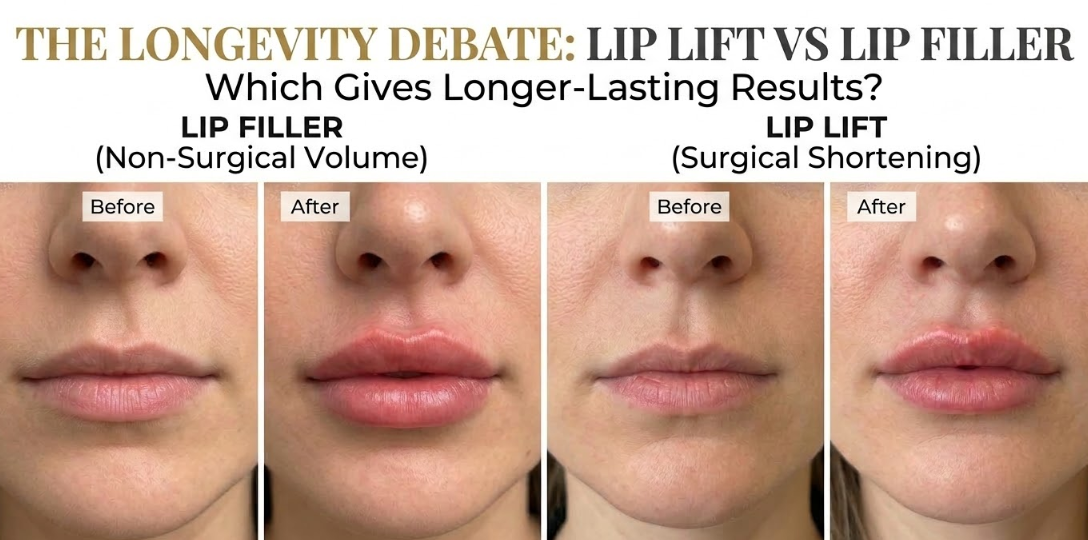
A lip lift is a minor surgical procedure that permanently shortens the distance between the base of the nose and the upper lip, an area called the philtrum. As we age, or in people born with a naturally long philtrum, this distance lengthens and the pink part of the upper lip thins and loses definition. By removing a small, precisely measured strip of skin beneath the nose, the upper lip is physically lifted upward and slightly outward, exposing more of the pink lip tissue and creating a fuller, more youthful shape without adding any foreign substance.
The ideal philtral length in women is generally considered to be around 11–13 mm, and slightly longer in men. When this distance extends beyond that, the lips can appear to disappear into the face. A lip lift addresses this anatomical issue directly in a way that no injectable treatment can replicate. The result is permanent.
The most commonly performed technique in the UK is the bullhorn lip lift (also called the subnasal bullhorn), named for the shape of the curved incision made at the base of the nose. The scar sits in the natural shadow beneath the nostrils and is typically very well concealed once healed.
What Is Lip Filler?
Lip filler is a non-surgical injectable treatment using hyaluronic acid (HA), a gel substance that occurs naturally in the body. When injected into and around the lips by a skilled practitioner, it adds volume, enhances the lip border, defines the Cupid’s bow, and can subtly lift the upper lip through strategic placement. It does not alter the structure of the lip or shorten the philtrum. It adds physical substance to the existing lip tissue.
Popular HA filler products used for lip enhancement at UK clinics include Juvederm Volbella, Teoxane Redensity 1, Restylane Kysse, and similar formulations. These are CE-marked products specifically designed for the lip area. They are reversible with an enzyme called hyaluronidase, which is a significant advantage for anyone uncertain about their result or who experiences an adverse reaction.
See our overview of the best non-surgical aesthetic treatments available in the UK for a broader look at injectable and non-invasive options beyond lip enhancement.
The Longevity Verdict: Lip Lift vs Lip Filler
This is the question at the heart of the debate, and the answer is straightforward once you understand what each treatment changes:
Lip lift: permanent results. Once the healing is complete, usually three to six months after surgery, the structural change to the lip is lifelong. The philtrum does not elongate again. The exposed pink lip tissue stays elevated. You do not return for top-ups. The result naturally ages with your face, but it does not dissolve, migrate, or wear off.
Lip filler: temporary results. Standard hyaluronic acid lip fillers last between six and twelve months in most patients. Some premium formulations, such as Juvederm Vollure, are reported to last up to eighteen months in clinical conditions, but the average person finds their results looking noticeably softer or diminished by the nine-month mark, particularly in the lip area where HA metabolises faster than in other facial zones due to constant movement.
The difference over a ten-year period is significant. A single lip lift, costing between £2,500 and £6,000 in the UK depending on technique and location, is a one-time investment. Lip filler at one to two sessions per year across a decade at an average of £300 per session amounts to between £3,000 and £6,000 in repeat costs for a result that is never truly permanent. The long-term maths increasingly favours the lip lift for patients who are certain about wanting a lasting change.
Types of Lip Lift Surgery Available in the UK
Not all lip lifts are the same, and the right technique depends on your anatomy, the specific concern you want to address, and whether scarring location is a priority for you. Here is a summary of the procedures offered at UK surgical clinics in 2026:
| Technique | What It Does | Best Suited To |
| Bullhorn (Subnasal) | Removes bullhorn-shaped skin under nose; lifts entire upper lip | Most patients; the most common UK procedure |
| Italian Lip Lift | Two separate incisions under each nostril; lifts lip sides | Lip asymmetry; subtle lateral lift |
| Corner Lip Lift | Small wedge removed at mouth corners; upturns downward corners | Drooping or downturned mouth corners |
| Central Lip Lift | Single incision at base of nose; narrows philtrum centrally | Long central philtrum without asymmetry |
| V-Y Lip Lift | Internal incision inside mouth; no external scarring | Those wanting volume with zero visible scar |
| Direct / Gullwing | Strip removed above upper lip border; enhances vermilion | Prominent lip border definition needed |
Note: the bullhorn lip lift accounts for the majority of lip lift procedures performed annually at leading UK cosmetic surgery clinics. Always discuss technique suitability with a GMC-registered plastic surgeon before deciding.
Each technique has different scarring considerations. The bullhorn and Italian lip lift scars sit at the nose base and are generally hidden in the natural crease. The corner and direct lip lifts leave marks along the lip line, which fade significantly but may need more time to become imperceptible. The V-Y lift, performed entirely inside the mouth, leaves no external scar at all.
Lip Lift vs Lip Filler: Full Side-by-Side Comparison
Here is a comprehensive comparison across every factor that matters when making this decision in the UK:
| Factor | Lip Lift (Surgical) | Lip Filler (Injectable HA) |
| Result longevity | Permanent – lasts a lifetime | 6–18 months depending on product |
| How it works | Skin removed to shorten philtrum, lifts lip | HA gel injected to add volume & shape |
| Result appearance | Natural lift, defined Cupid’s bow | Added plumpness, border definition |
| Reversible? | No – surgical change is permanent | Yes – dissolved with hyaluronidase |
| Addresses volume? | Limited – primarily lifts and defines | Yes – adds direct volume |
| Addresses philtrum? | Yes – the primary purpose | No – cannot shorten the philtrum |
| Downtime | 7–14 days (visible swelling/bruising) | 24–48 hrs (mild swelling/bruising) |
| When results show | 3–6 months for full final result | Within 24–48 hrs (post-swelling) |
| UK cost | £2,500–£6,000 (London higher) | £200–£500 per session |
| 10-year true cost | One-time fee – no ongoing cost | £2,000–£5,000+ in repeat sessions |
| Scarring risk | Small scar at nose base – usually fades well | None – needle entry points only |
| Best for | Long philtrum, thinning upper lip with age | Volume loss, shape definition, testing |
Data sourced from published UK clinic pricing and peer-reviewed aesthetic medicine literature, Q1 2026.
Lip Lift vs Lip Filler Cost in the UK: The Full Picture
Cost is where many people begin, and where the decision often feels most difficult. A lip lift feels expensive upfront. Lip filler feels affordable per session. But the long-term picture changes the calculation significantly.
| UK Region / Tier | Lip Lift (surgical, all-in) | Lip Filler per session (HA) |
| London – Standard clinic | £3,000–£4,500 | £250–£450 |
| London – Harley St / Premium | £4,500–£6,000 | £350–£500+ |
| Major UK cities (regional) | £2,000–£3,500 | £200–£380 |
| UK average (all regions) | £2,500–£4,000 | £200–£450 |
| 10-yr true cost (lip filler) | N/A | £2,000–£4,500+ (repeat sessions) |
UK pricing compiled from publicly available clinic data and industry sources, early 2026. Confirm current fees directly with your chosen provider.
A bullhorn lip lift at a reputable UK clinic, including surgeon fee, facility, anaesthetic, and standard post-operative care, typically starts from £2,500 outside London and from £3,500 in the capital. Harley Street and other premium London practices can charge £5,000 to £6,000 for the same procedure. Many clinics offer finance packages, including interest-free spread payments over six to twelve months, which makes the upfront cost more manageable.
Lip filler in the UK ranges from £200 to £500 per session depending on the clinic tier, the volume used (typically 0.5ml to 1ml for lips), and the specific product. A session every nine to twelve months at an average of £300 per session equates to around £3,000 over ten years, with no structural change to show for it at the end of that period.
There is one cost often overlooked: the cost of dissolving lip filler if results are unsatisfactory. Hyaluronidase treatment to dissolve HA filler typically costs £150 to £250 at UK clinics, and in some cases more than one session is needed. Factor this into your budget if you are a first-time client who may want the option to reverse.
For more advice on navigating aesthetic treatments and finding trustworthy practitioners in the UK, visit our guide on how to choose the right aesthetic clinic for non-surgical and surgical treatments.
Who Is a Good Candidate for a Lip Lift?
A lip lift is not for everyone, and being a good candidate is more about anatomy and life stage than personal preference alone. You are likely to get the most from a lip lift if:
- Your philtrum is long – either naturally or due to age-related tissue descent – and this is causing your upper lip to disappear or sit too far from your nose
- You want a permanent result and you are confident in the aesthetic outcome after a thorough consultation with a qualified surgeon
- You have had repeated lip filler to try to create upper lip height, but it has only added projection or width rather than true vertical lift
- You are in good general health, a non-smoker (or willing to stop smoking for at least a month around surgery), and have realistic expectations for the healing timeline
- You are frustrated with the maintenance cycle of injectable treatments and want a one-time solution
- You have moderate to good skin elasticity, which supports better healing and scar resolution
It is equally important to know when a lip lift is not the right choice. If your primary concern is adding volume to thin lips rather than lifting an elongated philtrum, lip filler will give you a more appropriate result. And if you are considering surgery primarily to save money on filler, the decision should be based on anatomy first, not cost alone.
Always ensure your surgeon is registered with the General Medical Council (GMC) and ideally is a member of the British Association of Aesthetic Plastic Surgeons (BAAPS) or the British Association of Plastic, Reconstructive and Aesthetic Surgeons (BAPRAS). These memberships are your clearest assurance of surgical training and ethical standards in the UK.
Who Is a Good Candidate for Lip Filler?
Lip filler remains the most widely appropriate lip enhancement for the majority of clients presenting at UK aesthetics clinics. It is the better choice when:
- Your main concern is adding volume, fullness, or symmetry to your lips rather than shortening the philtrum
- You want to test how a lip enhancement looks before committing to any permanent change
- You want results you can adjust, refine, or reverse at any point
- You have a relatively normal philtrum length but lips that have thinned with age or that you have always considered too small
- You prefer a non-surgical approach due to recovery time constraints, needle-phobia versus surgery-phobia preferences, or simply personal choice
- You want a result for a specific occasion or period rather than a lifelong change
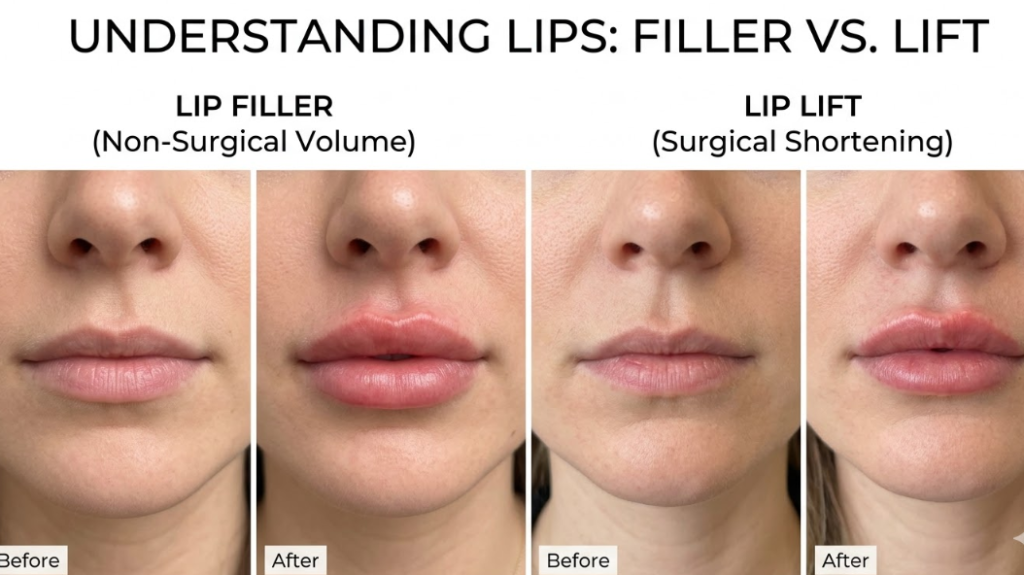
First-time lip filler clients are typically advised to start with a conservative volume of 0.5ml to 1ml rather than going straight to a dramatic result. This allows the skin and lip tissue to adjust, gives you an opportunity to see how your anatomy responds to HA, and produces the natural-looking outcome most people are actually seeking.
The most common regret with lip filler is not the product itself but the volume used. An experienced practitioner who understands facial proportions and takes a less-is-more approach will consistently produce results that look refreshed and intentional rather than obvious.
Can You Have a Lip Lift and Lip Filler?
Yes, and combining the two is a well-established approach at UK surgical practices. A lip lift addresses the structural issue of a long philtrum and creates lift and definition. Lip filler, added after full healing at around three to six months post-surgery, can then address any residual volume concerns without risk of over-projection.
This staged approach is often described by surgeons as the most anatomically logical route to comprehensive lip rejuvenation. The lift does the work that filler physically cannot do. The filler then fine-tunes volume at whatever modest level the individual anatomy needs, typically far less filler than someone using it as a standalone treatment.
UK clinics frequently report that patients who combine a surgical lip lift with occasional small-volume filler use far less product per year than they did before surgery, reducing ongoing maintenance cost significantly. Combined approaches also tend to produce the most natural-looking outcomes because each element is doing precisely what it is anatomically suited for.
For broader context on how surgical and non-surgical treatments complement each other in facial rejuvenation, explore our regularly updated content on anti-ageing treatments and skincare for every budget in the UK.
Safety, Risks, and What to Watch Out For
Risks of Lip Lift Surgery
A lip lift is a minor surgical procedure, but all surgery carries risk. The most common concerns include:
- Scarring – while most scars at the nose base fade significantly within six to twelve months, results depend on skin type, sun exposure, and aftercare
- Asymmetry – uneven healing or inaccurate pre-surgical marking can lead to asymmetric results requiring revision
- Over-correction – lifting too much can result in a surprised or unnatural expression, particularly if the philtrum was not genuinely elongated
- Wound complications – infection or poor healing, more likely in smokers, which is why smoking cessation before surgery is mandatory
- Numbness – temporary loss of sensation around the lips and base of the nose, usually resolving within weeks
Choosing a GMC-registered surgeon with BAAPS or BAPRAS membership, and using a CQC-registered facility, provides the strongest safeguards available in the UK right now.
Risks of Lip Filler
HA lip filler administered by a qualified practitioner is generally safe, but the following risks are real and documented:
- Bruising, swelling, and tenderness – common and usually resolves within five to seven days
- Lumps or nodules – often from poor product placement or inadequate massaging post-treatment
- Migration – filler moving beyond the intended injection zone, blurring the lip border over time with repeated treatments
- Vascular occlusion – a rare but serious complication where filler enters or compresses a blood vessel, requiring emergency dissolution with hyaluronidase
- Filler fatigue – repeated sessions over years can sometimes distort natural lip anatomy if not managed carefully
Since 2022, botulinum toxin and dermal fillers have been prescription-only medicines in England, meaning they must be prescribed by a regulated healthcare professional before administration. Checking that your practitioner is registered with the GMC, NMC, GDC, or GPhC, and requires a face-to-face consultation before treatment, is non-negotiable. Visit The Business Brew for regularly updated guides on aesthetic safety standards in the UK.
Frequently Asked Questions
1. Is a lip lift better than lip filler for long-lasting results?
If longevity is your primary concern, a lip lift delivers permanent results that lip filler cannot match. However, a lip lift addresses philtrum length and upper lip definition rather than volume. If your concern is volume, filler is the more appropriate treatment. For many people, the most complete result comes from combining both.
2. How long does lip filler last in the UK?
Most hyaluronic acid lip fillers in the UK last between six and twelve months. Some premium formulations can last up to eighteen months, though the lip area metabolises filler faster than most other facial zones due to constant movement. Top-ups are typically needed once or twice per year to maintain results.
3. How much does a lip lift cost in the UK in 2026?
Surgical lip lift costs in the UK range from around £2,500 in regional cities to £6,000 or more at premium London practices. The bullhorn lip lift, the most common procedure, typically starts from £3,000 to £3,500 in London. The cost is all-inclusive of the surgeon fee, facility, local anaesthetic, and follow-up care at most reputable clinics.
4. Does a lip lift look natural?
When performed by an experienced surgeon who takes precise measurements and does not over-correct, a lip lift produces highly natural-looking results. The goal is to restore a youthful proportion between the nose and lip, not to create an exaggerated pout. Many patients report that people notice they look refreshed without being able to identify exactly why.
5. What is the recovery time for a lip lift in the UK?
Most patients return to work and social activities within seven to fourteen days of a bullhorn lip lift. Initial swelling peaks in the first forty-eight to seventy-two hours and subsides significantly by the end of the first week. Sutures are removed at around five to seven days. The final, settled result is typically visible at the three to six month mark.
6. Can you have lip filler after a lip lift?
Yes. Many surgeons recommend waiting until the lip lift has fully healed, at around three to six months, before adding any filler if residual volume enhancement is wanted. Small amounts of filler can then be added without interfering with the surgical result. Most patients find they need significantly less filler post-lift than they did before.
7. Will a lip lift leave a noticeable scar?
Scarring is the most common concern about lip lift surgery. For bullhorn and Italian lip lifts, the scar sits at the base of the nose in a natural shadow, and most scars become very difficult to detect within six to twelve months. Results depend significantly on surgeon skill, skin type, and diligent aftercare including sun protection and prescribed scar creams.
8. Is lip filler reversible?
Yes. Hyaluronic acid lip filler can be dissolved using an enzyme called hyaluronidase. The treatment takes effect within twenty-four to forty-eight hours and is typically used in cases of asymmetry, migration, vascular complications, or simply if you change your mind about the result. Dissolution at a UK clinic typically costs between £150 and £250.
9. What is the difference between a lip lift and a lip flip?
A lip flip uses a small amount of botulinum toxin injected into the muscle above the upper lip to relax it, allowing the lip to roll slightly outward and appear marginally fuller. It lasts only two to three months and adds no volume. A lip lift is a surgical procedure that permanently shortens the philtrum. A lip flip is a very temporary, subtle effect; a lip lift is a structural, permanent change.
10. How do I choose between a lip lift and lip filler in the UK?
Start with an honest assessment of your primary concern. If your upper lip appears thin or hidden because of a long philtrum distance, a lip lift addresses the root anatomical cause. If your lips are simply lacking in volume or definition regardless of philtrum length, filler is the appropriate route. A consultation with both an experienced aesthetics practitioner and a GMC-registered plastic surgeon gives you the most complete picture before making a decision.
Final Thoughts: Which Is Right for You in 2026?
The honest answer is that lip lift and lip filler are not really competing with each other, because they are not doing the same thing. Filler adds volume. A lift changes structure. The treatment that gives longer-lasting results is the lip lift, without question. The treatment that gives reversible, low-commitment, adjustable results is lip filler, also without question.
The right choice depends entirely on what problem you are trying to solve. If your upper lip is sitting too far from your nose, thinning with age, or losing its definition at the Cupid’s bow because of philtrum elongation, a lip lift addresses that permanently and elegantly. If you want more volume, a softer pout, or simply want to explore enhancement without surgical commitment, lip filler remains the most versatile and appropriate starting point.
For the growing number of people who have spent years in the lip filler maintenance cycle and are asking whether there is a more permanent solution, the answer is yes. But get an in-person assessment with a qualified surgeon who can tell you whether your anatomy actually calls for it. The best aesthetic results in 2026, as always, start with the right diagnosis of the problem, not just the right treatment in isolation.