







Ozempic, Wegovy, Mounjaro and other GLP-1 receptor agonist medications have changed the weight loss conversation in the UK more profoundly in the past three years than anything in the previous two decades. For hundreds of thousands of people, these injections have delivered the kind of sustained, meaningful weight loss that years of effort had not. But for a significant and growing number of those patients, reaching their target weight has revealed a new problem that the medication cannot solve: loose, excess skin, particularly around the abdomen.
When you lose a substantial amount of weight quickly, skin that has been stretched over months or years does not simply snap back. The abdomen is the most commonly affected area, and for many post-Ozempic patients, the result is a soft overhang or apron of skin that creates both physical discomfort and significant confidence issues. No amount of exercise changes this. Skin laxity after significant weight loss is a structural issue, not a fitness one.
This guide is written specifically for UK patients who have lost weight on GLP-1 medications and are now asking whether a tummy tuck, medically known as an abdominoplasty, is the right next step. It covers everything you need to know before booking a consultation: when to have it, what type of procedure suits your situation, what it costs, how long recovery takes, and how to find the right surgeon safely in the UK in 2026.
Why Does Ozempic Weight Loss Leave Excess Skin?
To understand why excess skin after Ozempic is so common, it helps to understand what happens to the skin during significant weight gain and loss.
Skin is remarkably elastic, up to a point. When body fat accumulates over time, the skin stretches to accommodate the increased volume. This stretching causes the collagen and elastin fibres that give skin its structural integrity to thin and weaken. The longer the skin has been stretched, and the older the patient, the less capacity those fibres retain to contract again after weight is lost.
GLP-1 medications like semaglutide (the active ingredient in both Ozempic and Wegovy) work by suppressing appetite and slowing gastric emptying, enabling a caloric deficit that drives fat loss, often 15% or more of total body weight in clinical trials. This rate of loss is faster than traditional diet and exercise alone, which means the skin has less time to adapt. The result is that once the fat is gone, the skin simply has no structural support to return to its former shape.
The abdomen is the most commonly affected area for several reasons: it is where the body preferentially stores visceral and subcutaneous fat, it is the zone most impacted by hormonal fat distribution in both women and men, and it is the area where pregnancy-related stretching compounds existing laxity. Post-Ozempic abdominal skin excess is therefore not a cosmetic concern born of vanity, it is a direct physiological consequence of successful weight loss.
Is a Tummy Tuck the Right Procedure After Ozempic?
The first question a plastic surgeon will assess is whether you are actually an appropriate candidate for abdominoplasty at this stage. The answer depends on several interrelated factors, and it is important to be realistic about each one before investing time, money, and recovery in a surgical procedure.
You Need to Have Reached a Stable Weight
This is the single most critical requirement before any post-weight-loss body contouring surgery. Surgeons consistently recommend that patients maintain a stable weight, defined as less than a five-pound fluctuation, for a minimum of three to six months before proceeding with abdominoplasty. Ideally, six to twelve months of stability is even better.
The reason is straightforward. If you are still losing weight at the time of surgery, the final amount of excess skin cannot be accurately assessed, and the surgical result will be partially undone by further weight change. Additional laxity developing after surgery can distort the result and may require revision. A stable plateau confirms that the body has reached its new equilibrium and the surgical plan can be made with precision.
For patients still actively taking GLP-1 medications, this means the question of whether to continue or pause Ozempic becomes relevant. Current multi-society clinical guidance suggests most patients can continue GLP-1 medications leading up to surgery unless they are experiencing gastrointestinal side effects. However, most surgeons recommend stopping the medication at least 14 days before surgery to allow gastric emptying to normalise and reduce the risk of aspiration under general anaesthetic, a recognised concern that has led professional anaesthetic bodies to issue guidance on this matter.
Your BMI Should Be Within a Healthy Range
Abdominoplasty is not a weight loss procedure. It removes excess skin and repairs muscle laxity but is not designed to reduce a high BMI. Most UK consultant plastic surgeons recommend a BMI of 30 or below before proceeding with surgery, and the NHS advises that the procedure is generally reserved for those already at or near a healthy weight. Patients with a BMI significantly above 30 face considerably higher surgical risks including wound healing complications, infection, and deep vein thrombosis.
If you are still working towards a healthy BMI, the clinical recommendation is to continue with your GLP-1 medication and lifestyle changes until your weight has genuinely stabilised at a sustainable level before considering surgery.
Your General Health Should Support Major Surgery
A tummy tuck is a major surgical procedure carried out under general anaesthetic, typically lasting between two and five hours depending on the extent of skin removal and whether muscle repair is included. Your surgeon and anaesthetist will assess your cardiovascular health, blood clotting profile, smoking status, and medications before clearing you for surgery.
- Smokers are required to stop for a minimum of six weeks before and after surgery to reduce healing complications and blood flow risks
- Patients with poorly controlled diabetes, active cardiovascular conditions, or blood clotting disorders may need additional medical clearance
- Iron levels and nutritional status are particularly important to assess in post-GLP-1 patients, as rapid weight loss can deplete key nutrients essential for wound healing
You Should Have Completed Your Family
Pregnancy after a tummy tuck is possible and medically safe, but it will partially or fully undo the surgical result. The repaired abdominal muscles can separate again, and the skin will re-stretch to accommodate pregnancy. Most UK surgeons strongly recommend that patients have completed their family before undergoing abdominoplasty to protect the longevity of the result.
What Actually Happens During a Tummy Tuck?
There is a wide spectrum of procedures that fall under the umbrella of abdominoplasty, and the type recommended for post-Ozempic patients depends on how much excess skin is present, where it is located, and whether diastasis recti is involved. Understanding the options helps you ask the right questions at your consultation.
| Procedure Type | What It Addresses | Best Suited For |
| Mini Abdominoplasty | Excess skin below the navel only; limited muscle repair | Mild laxity below the belly button; BMI under 28 |
| Full Abdominoplasty | Entire abdominal area; full diastasis recti repair; navel repositioning | Moderate to significant skin excess; typical post-Ozempic patient |
| Extended Abdominoplasty | Abdomen plus flanks and lower back; broader skin removal | Significant laxity extending around the hips |
| Fleur-de-Lis Abdominoplasty | Vertical + horizontal incisions; maximum skin removal | Massive weight loss with severe vertical excess |
| Circumferential Body Lift | 360° skin removal from abdomen, back, buttocks and hips | Major weight loss affecting the entire lower trunk |
| Tummy Tuck + Liposuction | Skin removal + simultaneous fat contouring of flanks/hips | Where stubborn fat deposits remain alongside skin laxity |
Procedure selection is determined by your surgeon based on in-person assessment of skin laxity, fat distribution, muscle wall integrity, and overall body shape. There is no universal right answer, the approach must match the anatomy.
For the typical post-Ozempic patient in the UK who has lost a significant amount of weight, typically more than three to five stone, the full abdominoplasty is the most commonly recommended procedure. This involves a horizontal incision made across the lower abdomen from hip bone to hip bone, carefully placed below the underwear or swimwear line. The surgeon removes the excess skin, tightens the abdominal wall muscles if separated, and repositions the belly button through a new opening in the tightened skin. The result is a significantly flatter, firmer abdominal profile.

Where laxity extends around the flanks and lower back, common after loss of more than five to seven stone, an extended abdominoplasty or circumferential body lift may be recommended to address the full circumference of excess tissue.
Liposuction is frequently combined with abdominoplasty to refine the contours of the flanks, hips, and outer thighs at the same time, producing a more balanced and natural result. A July 2025 study published in Plastic and Reconstructive Surgery found that patients who underwent abdominoplasty with liposuction continued to lose weight post-operatively, an average of five to six pounds at three to six months, and up to ten pounds by five years, suggesting that the combination may have a meaningful effect on long-term body composition beyond the immediate surgical result.
Tummy Tuck Recovery: What to Expect Week by Week
Recovery from a full abdominoplasty is the most significant commitment involved in this surgery, and it is one that post-Ozempic patients frequently underestimate. Understanding the timeline in advance allows for realistic planning around work, childcare, and daily life.
The First 48–72 Hours
Most full abdominoplasty patients stay in hospital for one to two nights. You will wake from surgery with a compression garment in place, one or two surgical drains to remove accumulated fluid, and some expected soreness, tightness, and swelling across the abdominal area. Walking upright will feel restricted initially, many patients describe a sensation of being pulled forwards, which eases as the tissue adjusts over the first weeks.
Week 1–2
The majority of patients find the first week the most physically demanding. Drains are typically removed within the first week. Light, short walks are encouraged from day one to promote circulation and reduce DVT risk, but any activity involving bending, lifting, or straining the abdominal wall is strictly avoided. Most patients need two weeks off work for desk-based roles and four to six weeks for physically demanding jobs.
Week 3–6
Swelling begins to reduce significantly in weeks three to six, although some residual swelling in the lower abdomen can persist for three to six months. The compression garment is worn for a minimum of six weeks post-surgery. Light exercise such as walking can resume gradually from around week three. All strenuous exercise, heavy lifting, and abdominal workouts are avoided for a minimum of six weeks.
3–6 Months
The final, settled result of a tummy tuck becomes visible at around three to six months, once swelling has fully resolved and the scar has begun to mature. The hip-to-hip scar fades from red to pink to a pale, flat line over twelve to eighteen months. Good sun protection and scar management products (silicone gel, silicone sheets) support the best scar outcome.
For patients who stopped their GLP-1 medication prior to surgery, this recovery period is also when conversations about whether to resume medication at a maintenance dose, to protect against weight regain, should happen in collaboration with both the operating surgeon and the prescribing clinician.
Tummy Tuck Cost UK 2026: What You Will Actually Pay
Abdominoplasty is one of the highest-cost procedures in private UK cosmetic surgery, and understanding the full cost before committing is essential. The NHS does not routinely fund tummy tuck surgery, including in post-weight-loss patients, except in very limited reconstructive circumstances involving severe medical complications such as chronic skin infection or significant functional impairment.
| Procedure | UK Cost Range (all-in, private) | Typical Hospital Stay |
| Mini Tummy Tuck | £4,000–£7,000 | Day case or 1 night |
| Full Abdominoplasty | £6,500–£10,500 | 1–2 nights |
| Extended Abdominoplasty | £8,000–£13,000 | 2–3 nights |
| Fleur-de-Lis Abdominoplasty | £9,000–£13,000 | 2–3 nights |
| Circumferential Body Lift | £11,000–£18,000+ | 2–4 nights |
| Tummy Tuck + Liposuction | £8,000–£14,000 | 1–2 nights |
Pricing sourced from published UK private clinic data and multiple independent sources, Q1 2026. All-inclusive fees should cover surgeon, anaesthetist, theatre, hospital stay, post-operative garments, and follow-up appointments. Always request a fully itemised written quote.
The NHS guidance page for abdominoplasty states a cost range of approximately £5,000 to £10,000 for a UK private procedure. Independent clinic data for 2026 places the realistic range for a full abdominoplasty at reputable UK providers between £6,500 and £10,500, with extended and fleur-de-lis procedures reaching £13,000 or more. Circumferential body lifts for patients with the most extensive post-weight-loss skin excess typically start from £11,000 and can exceed £18,000 when combined with other procedures.
Several important cost points specific to the post-Ozempic patient in the UK:
- Finance options are widely available at reputable UK providers, including interest-free spread payments over six to twelve months. Always confirm the finance provider is FCA-regulated before signing
- Medical travel to Turkey or other overseas destinations is frequently advertised at headline prices of £2,500 to £4,500. These prices routinely exclude consultant anaesthetist fees, revision care, management of complications after return to the UK, and the post-operative support structure that is standard in UK private care
- Combining procedures such as abdominoplasty with liposuction or breast surgery as part of a single operative plan can be more cost-effective than separate procedures, but only if the additional procedures are clinically appropriate, not simply convenient to do simultaneously
- Revision surgery, which may be needed in a small number of cases, typically costs between £4,000 and £8,000 in the UK, a strong reason to invest in quality from the outset
For broader guidance on navigating the UK private surgery market and what questions to ask before committing to any aesthetic procedure, see our guide to choosing the right aesthetic clinic in the UK.
Realistic Expectations: What a Tummy Tuck Can and Cannot Do
One of the most important conversations at any pre-operative consultation is calibrating expectations. A tummy tuck is genuinely transformative for the right patient, but it is not magic, and understanding its limits protects against disappointment.
What a Tummy Tuck Will Do
- Remove the excess abdominal skin panel that cannot be resolved through any non-surgical means
- Tighten and repair separated abdominal muscles (diastasis recti), restoring a flat and functional muscle wall
- Remove stretch marks located on the skin panel being excised, typically the area below the belly button
- Create a significantly flatter, firmer abdominal contour that looks and feels proportional to the patient’s new body
- Eliminate the physical discomfort, chafing, skin fold infections, and hygiene challenges that many patients with significant abdominal skin excess experience
What a Tummy Tuck Will Not Do
- Substitute for a healthy weight, surgery should only happen once weight is stable and at an appropriate level
- Remove stretch marks above the belly button, on the flanks, or outside the excised skin panel
- Guarantee permanent results if substantial weight is regained, significant weight fluctuation after surgery can reduce the longevity of the outcome
- Correct skin laxity on the thighs, arms, or breasts, separate procedures are required for these areas
- Produce a visible result immediately, full results take three to six months to settle, and scar maturation takes twelve to eighteen months
The broader trend in UK cosmetic surgery in 2026 is toward natural, proportional results rather than an artificially tightened appearance. The goal of a well-executed post-weight-loss abdominoplasty is a midsection that looks like it belongs to the patient’s body, not one that has been pulled to an extreme tightness that creates long-term tension or an artificial silhouette.
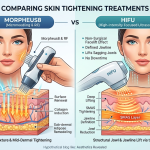
For patients considering non-surgical alternatives alongside or before surgery, treatments such as Morpheus8 RF microneedling or HIFU can address mild skin laxity and texture concerns but cannot remove surplus skin. They are not a substitute for abdominoplasty in patients with genuine excess tissue. Read our comparison of Morpheus8 vs HIFU for non-surgical skin tightening in the UK for more on what those options can realistically achieve.
How to Choose the Right Surgeon for a Post-Ozempic Tummy Tuck in the UK
Abdominoplasty is a major surgical procedure and the consequences of poor technique, scarring complications, asymmetry, wound breakdown, haematoma, are difficult and expensive to correct. Choosing the right surgeon is not a variable to optimise on cost.
Here is exactly what to look for when researching UK plastic surgeons for post-weight-loss abdominoplasty:
- GMC registration: Every surgeon practising in the UK must be registered with the General Medical Council. Verify registration at gmc-uk.org before any consultation
- Specialist plastic surgery training: Look for surgeons on the GMC Specialist Register in plastic surgery. FRCS(Plast) after a surgeon’s name indicates completion of a specialist UK plastic surgery training programme
- BAAPS or BAPRAS membership: The British Association of Aesthetic Plastic Surgeons and the British Association of Plastic, Reconstructive and Aesthetic Surgeons are the leading professional bodies for UK plastic surgeons. Membership requires peer-reviewed audit of surgical outcomes
- CQC-registered facility: All independent clinics and hospitals performing surgery in England must be registered with the Care Quality Commission (CQC). Verify registration and read inspection reports at cqc.org.uk before committing
- Post-weight-loss body contouring experience: Ask specifically about the surgeon’s experience with post-bariatric or post-GLP-1 patients. This patient group has specific anatomical considerations, wound healing factors, and muscle repair complexity that benefits from dedicated experience
- Mandatory cooling-off period: The ethical standards published by the Royal College of Surgeons require a minimum cooling-off period between consultation and booking. Any surgeon who pressures you to book on the day of your first consultation should be avoided
Also be alert to the distinction between a plastic surgeon and a cosmetic surgeon. In the UK, the title cosmetic surgeon is not a legally protected term and does not require the same training as a specialist plastic surgeon. A consultant plastic surgeon operating on the Specialist Register of the GMC has completed a minimum of ten years of medical training and surgical residency. This distinction matters enormously for a procedure of this complexity.
For more detailed guidance on navigating the UK aesthetics and cosmetic surgery market safely, explore The Business Brew’s regularly updated resources on UK aesthetic treatments.
How long should I stop Ozempic before a tummy tuck?
Most surgeons recommend stopping Ozempic or similar GLP-1 medications at least two weeks before surgery. You should also maintain a stable weight for a few months to ensure the best surgical results.
Can I get a tummy tuck on the NHS after weight loss?
In most cases, the NHS does not cover tummy tucks as they are considered cosmetic. Funding is only approved in rare cases involving serious medical complications.
How much does a tummy tuck cost in the UK?
A tummy tuck typically costs between £6,500 and £10,500 at private clinics. More advanced procedures like body lifts can cost significantly more depending on complexity.
What is diastasis recti and can surgery fix it?
Diastasis recti is a separation of abdominal muscles that causes a bulge in the stomach. A tummy tuck usually includes muscle repair, helping restore a flatter and stronger core.
How long does recovery from a tummy tuck take?
Most people return to light work within two weeks, but full recovery takes several weeks. Final results, including scar fading, can take a few months to fully settle.
Will tummy tuck results last after weight changes?
The results are long-lasting, but significant weight gain can affect the outcome. Maintaining a stable weight helps preserve the results over time.
Can I combine a tummy tuck with other procedures?
Yes, it’s often combined with liposuction or breast procedures for enhanced results. Your surgeon will advise based on your health and treatment goals.
What’s the difference between a tummy tuck and a body lift?
A tummy tuck focuses on the front of the abdomen, while a body lift treats the entire lower body. Body lifts are usually recommended after major weight loss.
How do I choose a qualified tummy tuck surgeon in the UK?
Look for surgeons registered with the GMC and qualified in plastic surgery. It’s also important to choose a clinic that is properly regulated and experienced in post-weight-loss procedures.
Is a tummy tuck safe after using weight loss injections?
Yes, it is generally safe when done by a qualified surgeon and after stopping medication as advised. Proper preparation and medical evaluation are key to reducing risks.
Final Thoughts: The Tummy Tuck as the Final Chapter of Your Ozempic Journey
Losing a significant amount of weight with GLP-1 medication is a genuine achievement. For many UK patients, it has meant reclaiming health, mobility, and confidence in ways that years of previous effort had not delivered. The frustration of arriving at that goal and finding that excess skin prevents you from fully inhabiting your new body is real, documented, and increasingly common as the cohort of post-Ozempic patients grows.
A tummy tuck, when performed at the right time, on the right patient, by the right surgeon, is one of the most reliably effective procedures in plastic surgery. The results are permanent for the structural changes made, and the transformation in quality of daily life, from freedom from skin fold discomfort to being able to wear fitted clothing without anxiety, is frequently described by patients as the most meaningful aesthetic decision they have made.
The two non-negotiables before proceeding are weight stability and surgeon quality. Everything else, procedure type, timing of GLP-1 pause, recovery planning, cost management, can be navigated with good advice. Get those two things right, and the final step of your weight loss journey can be exactly the finishing chapter it is meant to be.