



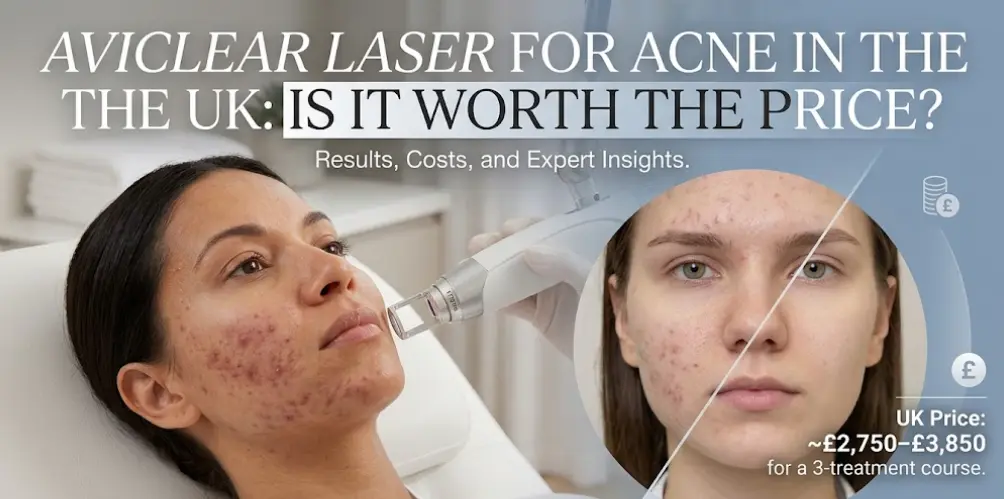
AviClear has become one of the most talked-about acne treatments in UK aesthetics and dermatology clinics, mainly because it promises something many acne sufferers want badly: fewer breakouts without long-term tablets, antibiotics or Roaccutane-style side effects.
The catch is the price. A full AviClear course in the UK is not cheap. Live clinic pricing currently puts a three-session course anywhere from around £2,100 in some regional clinics to £3,850–£4,500+ at premium London or consultant-led clinics. Consultation fees, aftercare and add-on treatments can push the total higher.
So, is AviClear laser for acne worth it? For the right person, it can be. But it is not a magic facial, it is not an overnight cure, and it is not automatically better than medical acne treatment. The real answer depends on your acne type, how much oil production drives your breakouts, what you have already tried, your budget, and whether the clinic is medically competent enough to assess you properly.
| Quick answerAviClear is most worth considering if you have persistent inflammatory acne, oily skin, repeated relapse after standard treatments, or a strong reason to avoid oral medication. It is less compelling if your acne is mild, mostly blackheads and congestion, pregnancy-related, or you have not yet tried evidence-based first-line acne treatment under medical guidance. |
What is AviClear and how does it work?
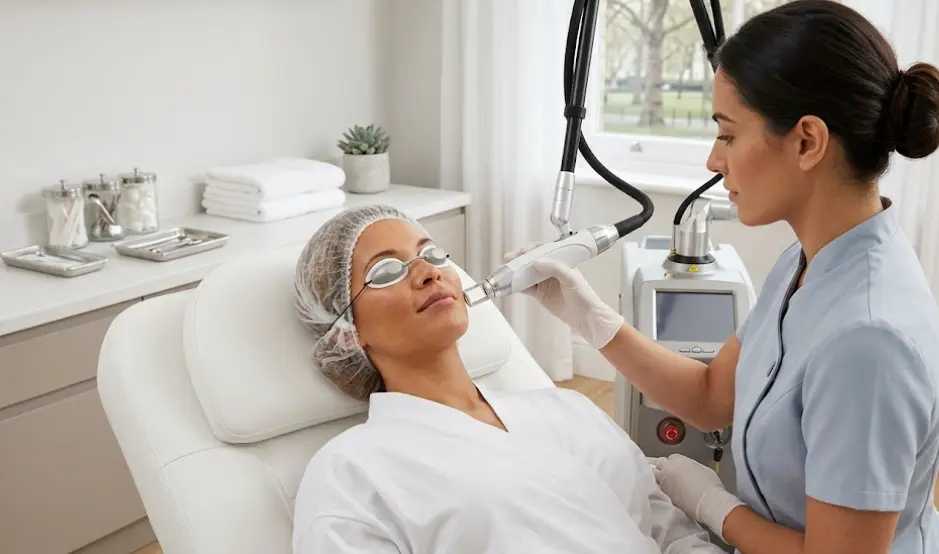
AviClear is a laser treatment designed specifically for inflammatory acne. Unlike resurfacing lasers that mainly improve texture or acne scars, AviClear targets one of acne’s key drivers: excess sebum, the oil produced by sebaceous glands.
The device uses a 1726 nm wavelength to selectively heat and suppress the sebaceous glands while built-in AviCool contact cooling helps protect the skin surface and improve comfort during treatment. The usual protocol is three 30-minute sessions, spaced roughly four to six weeks apart.
That mechanism matters because many acne treatments work around the problem rather than at the oil gland itself. Benzoyl peroxide reduces bacteria and inflammation. Retinoids reduce blocked pores. Antibiotics reduce inflammation and bacteria while you take them. Isotretinoin reduces oil production systemically. AviClear aims to reduce sebaceous gland activity locally, without daily medication.
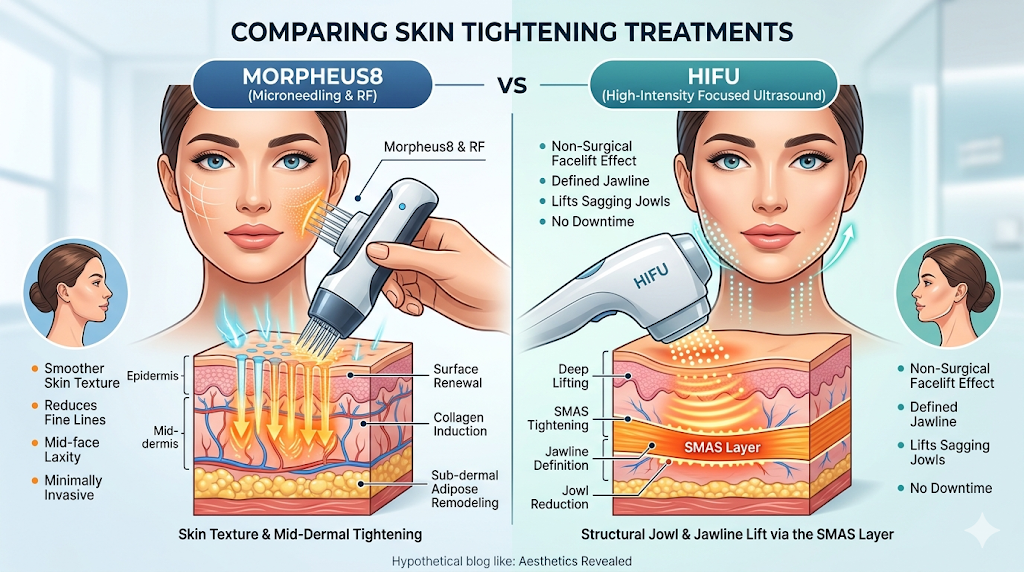
If you are comparing device-led treatments more broadly, The Business Brew’s Morpheus8 vs HIFU guide is useful for understanding how different energy-based skin treatments justify their price.
How much does AviClear cost in the UK?
Based on current publicly available UK clinic pricing, a realistic AviClear price range is:
| UK pricing band | Typical current price | Example source |
| Regional lower-end course pricing | About £2,100 for 3 treatments | The Minster Clinic, York |
| Mid-market private clinic course | From £2,750 to around £3,000 | MediZen; No. 23 Skin |
| Premium London clinic course | From £3,850 | PHI Clinic London |
| Consultant-led / premium London care | From £4,500+ | Self London and comparable clinics |
In simple terms, most UK patients should expect to budget around £2,500 to £4,500+ for a full course, plus any consultation fee. Some clinics charge a separate acne or dermatologist consultation. Others include ongoing review or imaging in the package.
This is why “AviClear cost UK” searches can feel confusing. One clinic may look expensive because it includes consultant assessment, imaging and follow-up. Another may quote a lower laser-only price, then charge separately for consultation, skincare, prescriptions or scar-treatment add-ons.
Before deciding, ask for the complete course price in writing, including consultation, all three sessions, aftercare, follow-up reviews and whether a fourth session would be discounted if needed.
Is AviClear worth the money?
AviClear is worth the price when the treatment matches the cause of your acne and the clinic gives you proper medical selection. It is not worth it when it is sold as a universal cure.
The strongest case for AviClear is long-term control of inflammatory acne without systemic medication. Official results report that 92% of treated patients saw at least half of their inflammatory acne resolved 12 months after their final session, although individual results vary. Peer-reviewed research on 1726 nm acne lasers also supports the idea that acne can continue improving after the treatment course rather than peaking immediately.
That delayed improvement is important. AviClear is not the treatment to choose if you need perfect skin in two weeks for a wedding or holiday. Many patients see gradual change over two to six months, with the most meaningful difference often appearing after the final session rather than after the first one.
Financially, AviClear may make sense if you have spent years paying for prescriptions, appointments, peels, facials, skincare routines and cover-up products without lasting control. It may also be appealing if you cannot take isotretinoin, do not want repeated antibiotic courses, or want to avoid hormonal medication. But if your acne would respond well to a standard 12-week evidence-based first-line treatment, jumping straight to a £3,000+ laser course may not be the smartest first step.
Who is AviClear best for?
- Persistent inflammatory acne with red spots, pustules, nodules or cystic-type breakouts.
- Adult acne that keeps relapsing after topical prescriptions or antibiotics.
- Oily acne-prone skin where excess sebum appears to be a major trigger.
- People who want a non-drug option and are not good candidates for isotretinoin or long-term oral medication.
- Patients who can commit to three sessions and wait several months for progressive results.
Who should think twice?
- People with mostly blackheads, whiteheads or congestion rather than inflammatory acne.
- Anyone expecting instant clearing after one appointment.
- Patients with active severe scarring risk who need urgent consultant dermatologist assessment.
- Anyone pregnant or undergoing treatment for skin cancer, as Cutera lists these as contraindications.
- People who have not yet had acne properly diagnosed. Not every “breakout” is acne vulgaris; rosacea, folliculitis and perioral dermatitis can look similar.
For more treatment decision guides, browse The Business Brew’s Skin Treatments category.
AviClear vs Roaccutane, antibiotics and other acne treatments
AviClear is often discussed as an alternative to Roaccutane, also known as isotretinoin, but the comparison needs care. Isotretinoin is a prescription medicine licensed in the UK for severe acne when other treatments have failed, and it can be highly effective. It also requires medical supervision because it can cause serious side effects and is strictly controlled in pregnancy.
AviClear is different. It is a clinic-based device treatment, not a prescription tablet. It does not require daily dosing or blood-test monitoring in the same way isotretinoin does, but it is also not usually available through the NHS and there are no large head-to-head trials proving it is superior to isotretinoin.
| Treatment option | Main advantage | Main limitation |
| Topical retinoids / benzoyl peroxide | Usually first-line, lower cost, evidence-based | Needs consistency; irritation is common; slower for severe acne |
| Oral antibiotics | Useful for inflammatory acne; often combined with topical treatment | Not a long-term solution; resistance and relapse are concerns |
| Isotretinoin / Roaccutane | Strong option for severe acne; can give long-lasting remission | Requires specialist supervision; side effects and pregnancy restrictions |
| IPL / LED / BBL acne treatments | May help inflammation, redness or bacteria-driven flares | Usually less targeted to sebaceous glands than AviClear |
| AviClear | Drug-free, targets oil glands, minimal downtime for many patients | High upfront cost; gradual results; not guaranteed; limited NHS availability |
Results: what can you realistically expect?
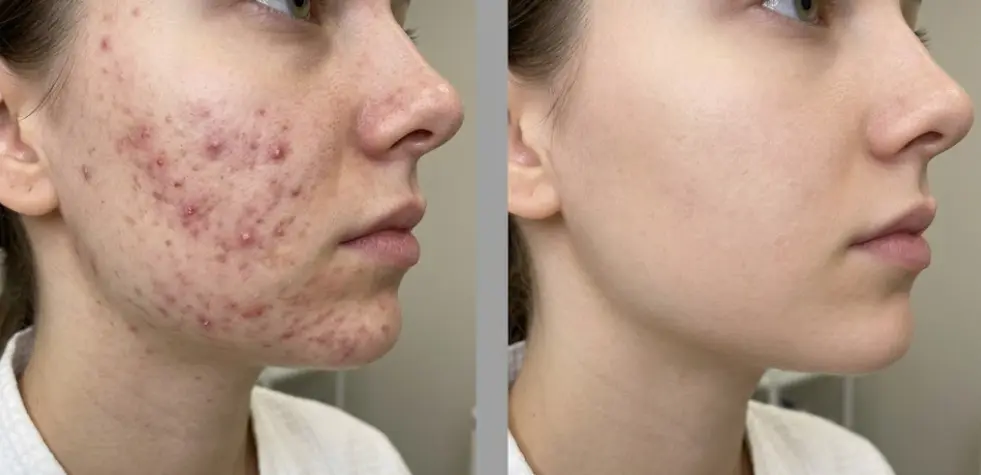
The most realistic expectation is fewer, less intense breakouts over time. Some patients also notice reduced oiliness and calmer skin, but AviClear should not be sold as a guaranteed acne scar treatment. If you already have pitted acne scars, texture, post-inflammatory redness or pigmentation, you may still need separate treatments after active acne is controlled.
A common timeline looks like this:
- First session: Some redness, warmth or mild swelling may occur. Acne may flare temporarily in some people.
- Second session: Breakouts may start becoming less intense, but many people are still in the early phase.
- Third session: The full course is complete, but results are still developing.
- Three to six months after treatment: This is often when the bigger improvement becomes easier to judge.
- Twelve months after treatment: Published and manufacturer-reported data suggest continued improvement for many responders.
Side effects and downtime
Most clinic pages describe AviClear as having little to no social downtime, and many patients return to normal activities the same day. The treatment sensation is often described as warmth or a snapping feeling, helped by the cooling system.
Possible side effects can include redness, swelling, tenderness, temporary acne flare-ups, dryness or short-lived sensitivity. Bruising is less common but may happen. As with any laser or energy-based treatment, the skill of the practitioner matters, especially for darker skin tones, active inflammation, recent tanning or complex acne histories.
A safe clinic should explain risks clearly, assess your medical history, check medications and recent treatments, and give written aftercare. If the consultation feels rushed or purely sales-led, do not book.
If you are researching aesthetic treatments for the first time, The Business Brew’s Baby Botox beginner guide is a useful example of the same “understand before you book” approach.
How to choose an AviClear clinic in the UK
- Ask who assesses you. For persistent, cystic, scarring or psychologically distressing acne, a dermatologist-led assessment is preferable.
- Confirm it is genuine AviClear. Ask the clinic to name the exact device and protocol.
- Check the full price. Make sure the quote includes consultation, three sessions, follow-up and aftercare.
- Ask what happens if it is not suitable. A trustworthy clinic should offer alternatives, not push the laser regardless.
- Request realistic before-and-after examples. Look for similar acne severity, skin tone and timeline, not just the most dramatic case.
- Discuss active acne vs scarring. AviClear may calm breakouts, but scars often require separate resurfacing, microneedling, TCA CROSS, subcision or laser treatment later.
The verdict: should you pay for AviClear?
AviClear is worth considering if your acne is persistent, inflammatory, oil-driven and affecting your confidence despite sensible treatment. It is especially relevant if you want a non-drug option, cannot tolerate standard medication, or keep relapsing after stopping treatment.
It is not worth rushing into if your acne is mild, undiagnosed, mostly comedonal, or likely to respond to lower-cost prescription treatment. It is also not worth it if a clinic promises guaranteed clearing, dismisses side effects, or cannot explain why AviClear is right for your specific skin.
The fairest summary is this: AviClear is expensive because it is a specialised, clinic-based laser treatment with a short protocol and growing long-term data. But the value is not in the machine alone. The value is in correct patient selection, skilled delivery, honest aftercare and knowing when a different acne treatment would be better.
FAQ Section
How much does AviClear cost in the UK?
Most UK patients should expect around £2,500 to £4,500+ for a full three-session course, although some regional clinics publish lower prices around £2,100 and premium London clinics may charge more.
How many AviClear sessions do you need?
The standard protocol is three sessions, usually spaced about four to six weeks apart. Some people may be advised to have an additional session depending on severity and response.
Does AviClear work for cystic acne?
AviClear is designed for inflammatory acne and may help some nodular or cystic-pattern breakouts, but severe cystic acne should be assessed by a dermatologist because scarring risk can be high.
Is AviClear better than Roaccutane?
Not necessarily. Roaccutane can be highly effective for severe acne but has strict medical controls and side effects. AviClear is a non-drug alternative, but there are no large head-to-head trials proving it is better for every patient.
Is AviClear painful?
Most patients describe warmth or a snapping sensation. AviClear uses contact cooling to improve comfort, and many clinic pages describe the treatment as tolerable without significant downtime.
How long do AviClear results last?
Results vary. Manufacturer-reported and clinical data suggest many responders continue improving for months after treatment, with 12-month data showing meaningful long-term reduction in inflammatory acne for many patients.
Can AviClear treat acne scars?
AviClear primarily targets active acne by reducing sebaceous gland activity. It may help prevent future scarring by reducing breakouts, but existing pitted scars usually need separate scar-specific treatments.
Can teenagers have AviClear?
Some UK clinics treat teenagers, but suitability should be assessed carefully, ideally with parental involvement and medical oversight.
Is AviClear safe for darker skin tones?
AviClear is marketed as suitable for all skin types and tones, but darker skin should still be treated by a practitioner experienced in laser treatment for that skin tone.
Is AviClear available on the NHS?
AviClear is generally a private clinic treatment in the UK. NHS acne care usually focuses on evidence-based topical treatments, oral antibiotics, hormonal options where appropriate and specialist referral for severe acne or scarring risk.